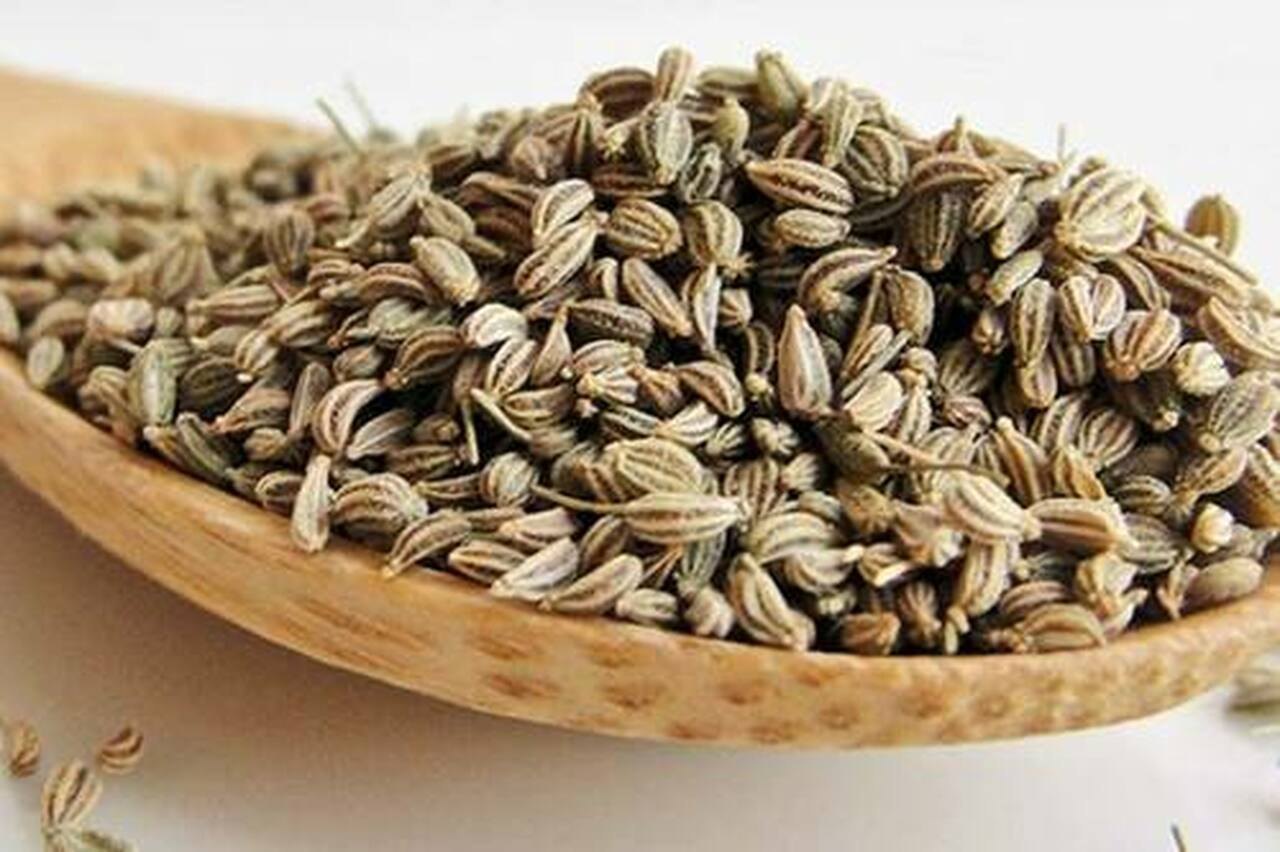
Ajwain is the seed many families reach for after a heavy meal. Its strongest case, though, is as a flavour tool rather than a guaranteed digestive cure.

What you get from 1 teaspoon (2 g)

Energy6 kcal
Protein0.3 g
Carbohydrate0.9 g
Fat0.3 g
Fibre0.8 g

Source: USDA FoodData Central – www.fdc.nal.usda.gov. Values are approximate and may vary by variety and preparation.

Read the numbers this wayThis serving gives a small macronutrient contribution in the serving normally used. The more important story is what its key nutrients do once the ingredient becomes part of a complete meal.

Why it earns a place

The seeds contain aromatic oils, including thymol, that create their sharp smell. They add flavour in tiny quantities and may stimulate saliva and digestive sensations, but human evidence for treating disease is limited. Ajwain can make besan, paratha dough and lentils taste fuller without extra sauces or large amounts of salt.

Protein: the repair material

Your body uses protein to replace worn-out cells and maintain muscle, skin, enzymes and many hormones. A meal with enough protein usually keeps you satisfied for longer than one built mainly from refined starch.

Folate: for making fresh cells

Folate is a B-vitamin the body uses whenever it copies DNA and makes new cells. That work is constant in the blood, skin and gut, and it becomes especially important during pregnancy and periods of growth.

Iron: carrying oxygen

Iron sits inside haemoglobin, the part of red blood cells that carries oxygen. Low iron can leave the body trying to work with a smaller oxygen-delivery system; vitamin C eaten in the same meal improves absorption of plant iron.

Unsaturated fat: useful when it replaces, not merely adds

Unsaturated fats can improve the fat balance of a meal when they replace some saturated fat. They still provide about nine calories per gram, so a measured amount matters.

Who may find this food especially useful

People who want more flavour without depending on packaged saucesHerbs and spices are especially useful when someone is trying to reduce excess salt, sugar or heavy sauces. Culinary amounts can make simple food easier to repeat, which is usually more valuable than concentrated supplements.

What needs context

The limitation worth knowingConcentrated ajwain oil is not the same as culinary seeds and may irritate the mouth or stomach. Pregnancy and regular medication are reasons to avoid self-prescribed high doses.

Try this next time

Ajwain cheela

Mix 1/2 cup besan with water, ajwain, onion and coriander. Cook thin pancakes on a lightly oiled pan.

Source: Besan Chilla – www.vegrecipesofindia.com

Authors

  • Mihir Gupta

    Do you know a punjabi who is not a foodie... well I would call
    Myself a health aficionado . Food has an enthusiastic effect on me . Being the younger sibling with various health conditions, I was nurtured in an environment of overprotectiveness. Their concern was rooted in my lower immunity and frequent illnesses and my mother always emphasized a healthy diet, instilling in me the belief that "you are what you eat”.
    This belief was put to the test when I was the only one in my family to contract COVID-19. The isolation was challenging but became a pivotal moment for self-care and introspection. During this period, I leaned heavily on the wisdom imparted by my mother, who shared recipes for nutritious green juices and herbal teas, all sourced from our kitchen garden. I meticulously journaled this experience, recording each meal and its impact on my health.

  • Breathing is not always automatic. I learnt that the hard way.
    Even now, I can recall the harrowing memory from when I was 4: 3 AM, my chest tightening faster than I could explain. My parents rushing to find the nebuliser.
    For most kids, a medicine cabinet is usually a background object. Not for me, though. Ours had a schedule. Steroids. Inhalers. Steam. Nebulisers.
    My missed school days were no longer measured by absences, but by how long it took for my lungs to recuperate. This illness exiled me from the very body my childhood self had once taken for granted.
    But alongside the treatment, I began to notice smaller rituals. Rituals that made the illness feel a little less consuming. The nushkas (home remedies) were endless: adrak wali chai, honey stirred into turmeric or the steam inhalation my mom transformed into a myriad of herbs. My mother never called it nutritional science, but she knew what to make and when.
    When “healthy food” came to my mind, I pictured imported products, expensive superfoods and products in a vocabulary my childhood self could not decode.
    But I looked at my own kitchen.
    Lentils simmering, ginger crushing, yoghurt culturing. Ingredients so familiar, yet so valuable. The more I googled, the more I realised health shouldn’t be hidden behind imported deliveries. Sometimes, it can begin with what’s already waiting on the kitchen counter.
    This realisation became the foundation of Food Thy Medicine for me.
    I met my co- founder in the waiting room of a pulmonologist's clinic, where our shared routines of inhalers and nebulisers made the idea feel less like a project but a conversation we had to continue. Thus, I began contributing to this project during the summers after Grades 9 and 10. What began as an interest in food and health became deeply personal: a way to turn years of dependence on doctors, prescriptions and steroids into a desire to understand the body better. As a co-author, I helped build a platform that makes nutrition information practical, not glamorous.
    The research for my AI ensured isn’t built for a perfect kitchen, rather the half- empty fridge, rushed day and leftovers that people ask “What can we do with this?” It turns familiar ingredients into realistic meal ideas and our research explains what those ingredients contribute nutritionally.
    The point was never to make food mythical but to make useful information feel less daunting and more reliable. It does not replace doctors or medicine: and it shouldn’t. I still take my prescribed medicine. I still live with asthma. But the illness taught me that care doesn’t begin and end at a clinic door and may be found in the ordinary decisions at home. What we cook, what we keep in the fridge and how we care for ourselves between appointments.
    I can’t control every flare up. But I can keep asking better questions, and help more people see possibility in the food around them.

Leave a Reply