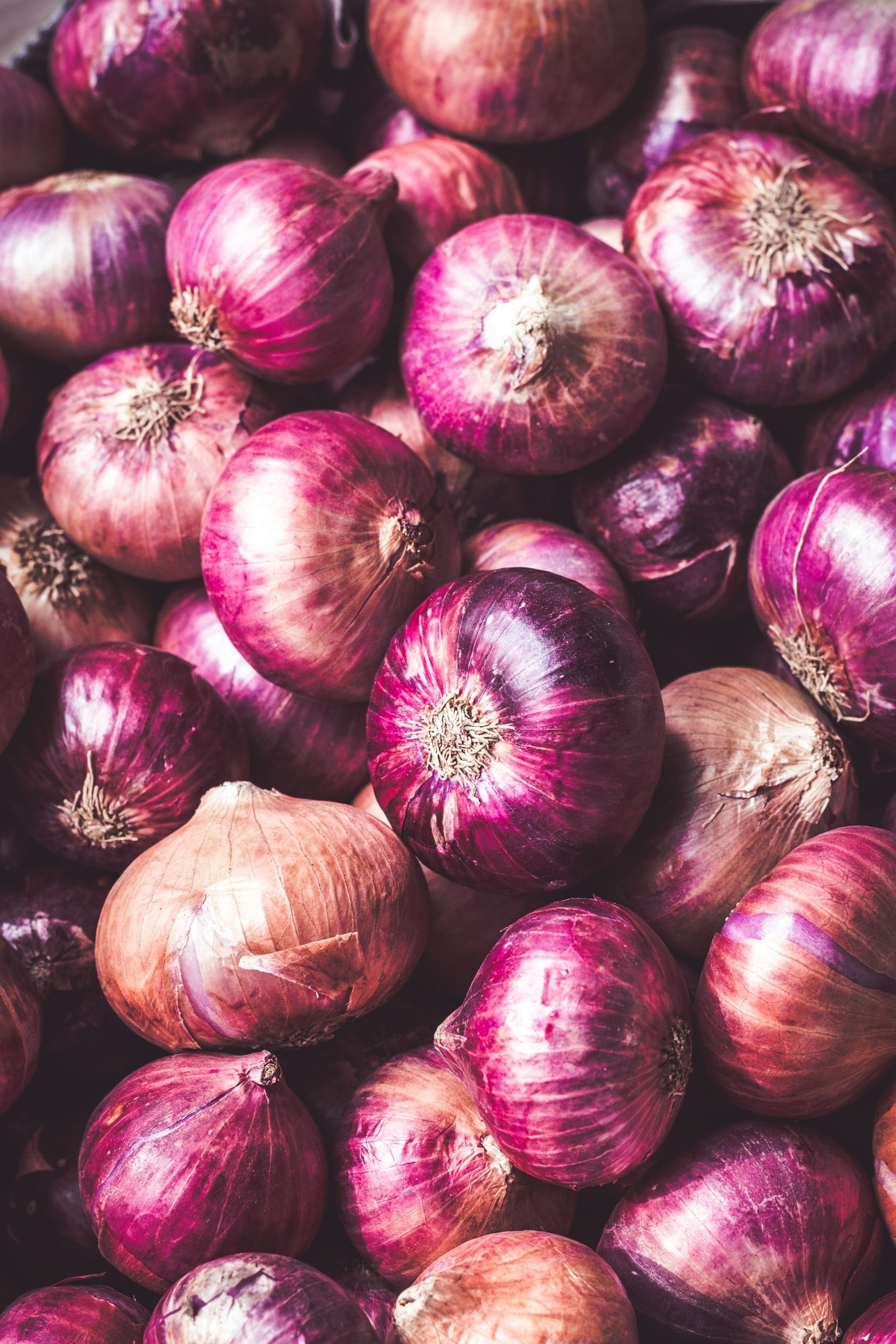
The combination of onion and ghee is beneficial. Onion curry becomes more nutritious and tastier when cooked with ghee. Drinking onion juice and ghee mixed with it increases strength. Squeezing lemon on pieces of raw onion helps in the digestion of food. Onion gives strength to the nervous system. Onion and honey both together become hot. Therefore, pregnant women should not consume both together, take only the onion. Although onion is beneficial, it seems to be harmful to some. There is a feeling of the sinking of gas, there is thirst. They can’t eat onions. It goes like this > Stomach hurts after eating.
Taking three doses of homeopathic medicine Thuja 200 twice daily for two days can cure the side effects of sinking in the stomach before meals. He can eat, and digest onions. One onion has the same power as two eggs.
Beauty Benefits – By eating onions regularly, dry skin becomes soft and smooth, the blood is purified, all the disorders of the skin are destroyed. Onion enhances beauty. Onion brings such a change in the body of women that by bringing redness, fairness, filling in the body parts, it makes the body shapely. Young men and women lick onion juice and honey daily. The face will shine.

Black spots –
If there are dark spots anywhere in the body if the spots are increasing, then keep on applying onion juice regularly. Blackness will end.

Memory Enhancer – Mix onion and ginger juice and ghee 1-1 spoon each and drink it twice daily for a few weeks. This will increase the memory power.

Stomach diseases – In case of stomachache, indigestion, gas, loss of appetite, etc., mix one spoon each of onion, garlic, ginger juice, three spoons of honey and lick twice daily before eating food. Stop urination, frequent urination- boil 50 grams of onion pieces in one kg of water. Filter it and drink it thrice by adding honey according to taste. would benefit.

Cough –
Mix the juice of half onion with honey, and fill the bottle. Drink two spoons four times a day. The cough will be fine. There is a rumble of phlegm in the cough. So, mix an equal quantity of onion juice and honey and drink two spoons four times a day. The cough will come out. If there is a cold, sore throat, then eat one roasted onion daily in the morning and evening.
Jaundice –
Mix two spoons of honey with three spoons Of onion juice and lick on a hungry stomach every morning.

Burning –
If there is a burning sensation anywhere in the body, apply onion chutney or apple juice.

Teething –
Calcium is replenished by the consumption Of onions. If there is any disease at the time of teething, mixing half a teaspoon of onion juice and honey and giving it once daily is beneficial.


Authors

  • Mihir Gupta

    Do you know a punjabi who is not a foodie... well I would call
    Myself a health aficionado . Food has an enthusiastic effect on me . Being the younger sibling with various health conditions, I was nurtured in an environment of overprotectiveness. Their concern was rooted in my lower immunity and frequent illnesses and my mother always emphasized a healthy diet, instilling in me the belief that "you are what you eat”.
    This belief was put to the test when I was the only one in my family to contract COVID-19. The isolation was challenging but became a pivotal moment for self-care and introspection. During this period, I leaned heavily on the wisdom imparted by my mother, who shared recipes for nutritious green juices and herbal teas, all sourced from our kitchen garden. I meticulously journaled this experience, recording each meal and its impact on my health.

  • Breathing is not always automatic. I learnt that the hard way.
    Even now, I can recall the harrowing memory from when I was 4: 3 AM, my chest tightening faster than I could explain. My parents rushing to find the nebuliser.
    For most kids, a medicine cabinet is usually a background object. Not for me, though. Ours had a schedule. Steroids. Inhalers. Steam. Nebulisers.
    My missed school days were no longer measured by absences, but by how long it took for my lungs to recuperate. This illness exiled me from the very body my childhood self had once taken for granted.
    But alongside the treatment, I began to notice smaller rituals. Rituals that made the illness feel a little less consuming. The nushkas (home remedies) were endless: adrak wali chai, honey stirred into turmeric or the steam inhalation my mom transformed into a myriad of herbs. My mother never called it nutritional science, but she knew what to make and when.
    When “healthy food” came to my mind, I pictured imported products, expensive superfoods and products in a vocabulary my childhood self could not decode.
    But I looked at my own kitchen.
    Lentils simmering, ginger crushing, yoghurt culturing. Ingredients so familiar, yet so valuable. The more I googled, the more I realised health shouldn’t be hidden behind imported deliveries. Sometimes, it can begin with what’s already waiting on the kitchen counter.
    This realisation became the foundation of Food Thy Medicine for me.
    I met my co- founder in the waiting room of a pulmonologist's clinic, where our shared routines of inhalers and nebulisers made the idea feel less like a project but a conversation we had to continue. Thus, I began contributing to this project during the summers after Grades 9 and 10. What began as an interest in food and health became deeply personal: a way to turn years of dependence on doctors, prescriptions and steroids into a desire to understand the body better. As a co-author, I helped build a platform that makes nutrition information practical, not glamorous.
    The research for my AI ensured isn’t built for a perfect kitchen, rather the half- empty fridge, rushed day and leftovers that people ask “What can we do with this?” It turns familiar ingredients into realistic meal ideas and our research explains what those ingredients contribute nutritionally.
    The point was never to make food mythical but to make useful information feel less daunting and more reliable. It does not replace doctors or medicine: and it shouldn’t. I still take my prescribed medicine. I still live with asthma. But the illness taught me that care doesn’t begin and end at a clinic door and may be found in the ordinary decisions at home. What we cook, what we keep in the fridge and how we care for ourselves between appointments.
    I can’t control every flare up. But I can keep asking better questions, and help more people see possibility in the food around them.

Next Post

Leave a Reply