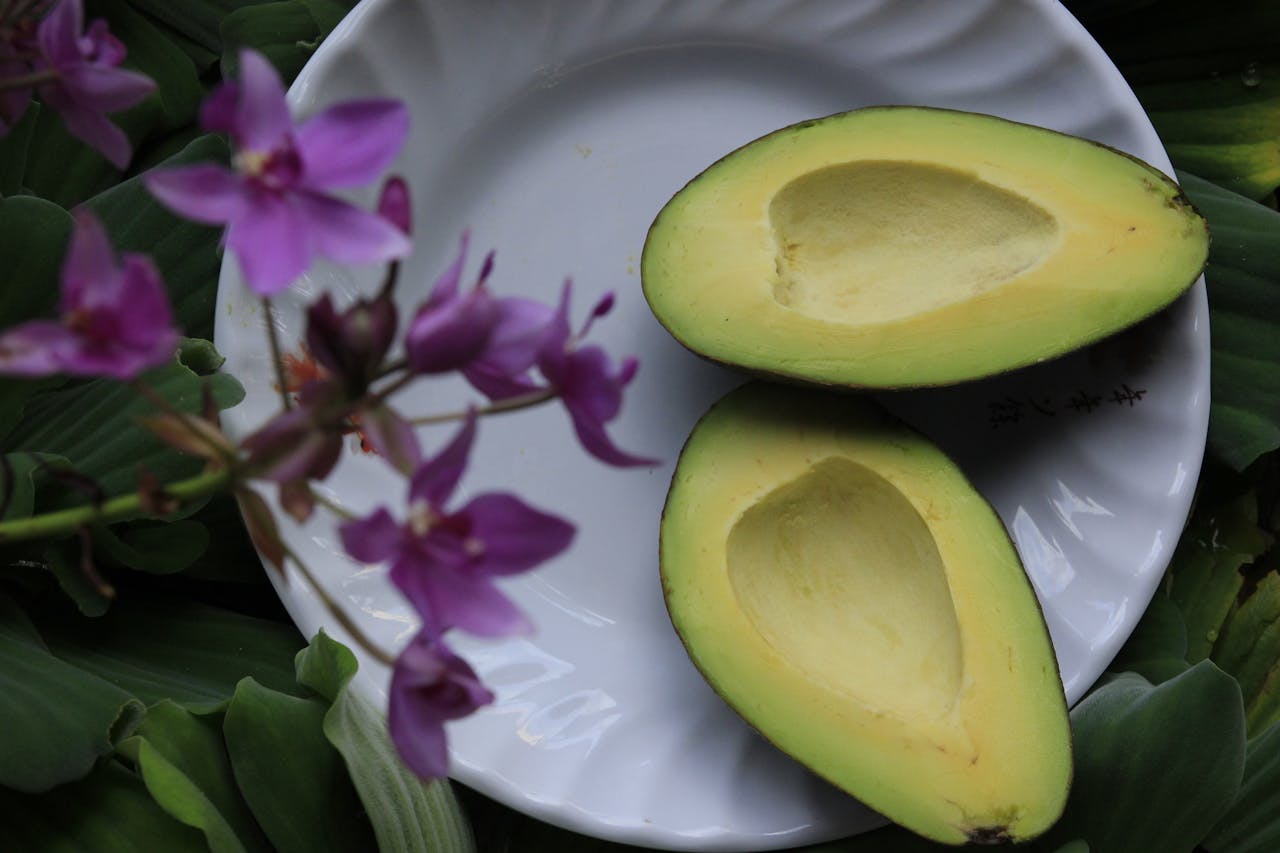
Avocado has somehow become both breakfast and a status symbol. Nutritionally, its value is less glamorous and more practical.
What you get from 100 g
| Energy | 160 kcal |
| Protein | 2 g |
| Carbohydrate | 8.5 g |
| Fat | 14.7 g |
| Fibre | 6.7 g |
Source: USDA FoodData Central – www.fdc.nal.usda.gov. Values are approximate and may vary by variety and preparation.
| Read the numbers this wayThis serving gives enough fibre to influence fullness and digestion, concentrated fat and energy. The more important story is what its key nutrients do once the ingredient becomes part of a complete meal. |
Why it earns a place
It combines unsaturated fat with fibre, potassium and folate. Fibre slows digestion, while potassium helps normal muscle and nerve function and helps counterbalance sodium. Its creamy texture can replace some butter, mayonnaise or cheese in a sandwich without making the meal feel sparse.
Dietary fibre: smoother digestion and steadier energy
Fibre gives stool enough bulk to move through the gut more easily. It also slows the release of sugar from a meal, so energy arrives more steadily instead of rising and falling all at once.
Folate: for making fresh cells
Folate is a B-vitamin the body uses whenever it copies DNA and makes new cells. That work is constant in the blood, skin and gut, and it becomes especially important during pregnancy and periods of growth.
Vitamin B12: blood and nerve maintenance
Vitamin B12 helps make healthy red blood cells and maintains the protective covering around nerves. It is found naturally mainly in animal foods and some fermented or fortified products.
Potassium: balancing fluid and keeping muscles working
Potassium helps balance some of sodium’s effects and is needed for normal muscle contraction and nerve signals. Fruit, vegetables, pulses and dairy are useful everyday sources.
Who may find this food especially useful
| People who need an easier way to add fruit and micronutrientsFruit is useful for people who skip breakfast, reach for packaged sweets or struggle to eat vegetables. Whole fruit is generally more filling than juice because the fibre remains. |
What needs context
| The limitation worth knowingAvocado is energy-dense, so half may be enough. It browns quickly but is still safe if refrigerated and used promptly. |
Try this next time
Avocado lemon toast
Mash 1/2 avocado with lemon and pepper and spread over wholegrain toast.
Source: Avocado Toast – www.bbcgoodfood.com