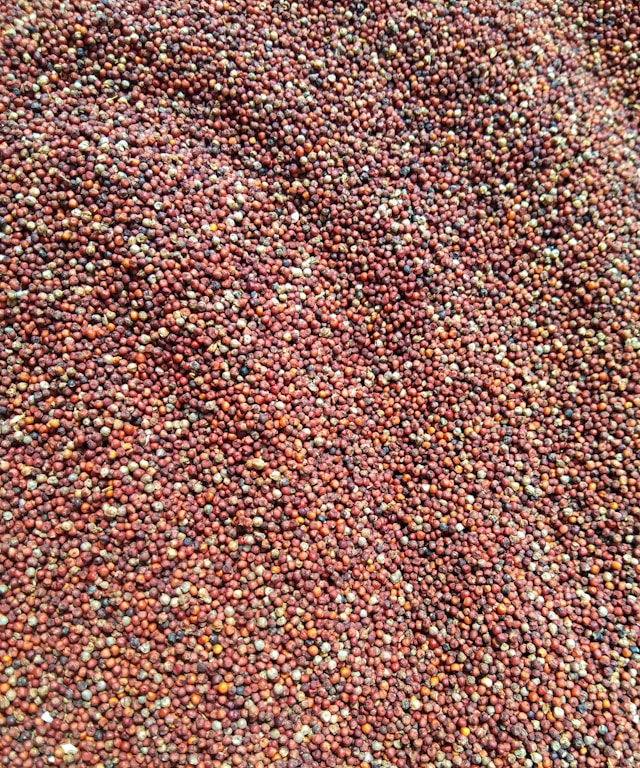
Mustard seeds are quiet until they hit hot oil; then the whole kitchen knows the tempering has started.
What you get from 1 teaspoon (2 g)
| Energy | 10 kcal |
| Protein | 0.5 g |
| Carbohydrate | 0.6 g |
| Fat | 0.7 g |
| Fibre | 0.2 g |
Source: USDA FoodData Central – www.fdc.nal.usda.gov. Values are approximate and may vary by variety and preparation.
| Read the numbers this wayThis serving gives a small macronutrient contribution in the serving normally used. The more important story is what its key nutrients do once the ingredient becomes part of a complete meal. |
Why it earns a place
They contribute tiny amounts of fat, protein and minerals, but their real value is pungent flavour from glucosinolate-derived compounds. A teaspoon can season a full dish of vegetables or curd rice without extra sauce.
Protein: the repair material
Your body uses protein to replace worn-out cells and maintain muscle, skin, enzymes and many hormones. A meal with enough protein usually keeps you satisfied for longer than one built mainly from refined starch.
Dietary fibre: smoother digestion and steadier energy
Fibre gives stool enough bulk to move through the gut more easily. It also slows the release of sugar from a meal, so energy arrives more steadily instead of rising and falling all at once.
Calcium: more than strong bones
Calcium gives bones and teeth their structure, but it also helps muscles contract and nerves send messages. The body keeps blood calcium tightly controlled, so regular food sources matter over time.
Vitamin B12: blood and nerve maintenance
Vitamin B12 helps make healthy red blood cells and maintains the protective covering around nerves. It is found naturally mainly in animal foods and some fermented or fortified products.
Who may find this food especially useful
| People who want more flavour without depending on packaged saucesHerbs and spices are especially useful when someone is trying to reduce excess salt, sugar or heavy sauces. Culinary amounts can make simple food easier to repeat, which is usually more valuable than concentrated supplements. |
What needs context
| The limitation worth knowingMustard allergy can be serious. Burnt seeds become bitter, and medicinal claims about swallowing large amounts are poorly supported. |
Try this next time
Mustard-seed vegetable tempering
Warm 1 teaspoon oil, add 1/2 teaspoon mustard seeds, let them pop, then stir in cooked vegetables.
Source: Mustard Tadka – www.vegrecipesofindia.com