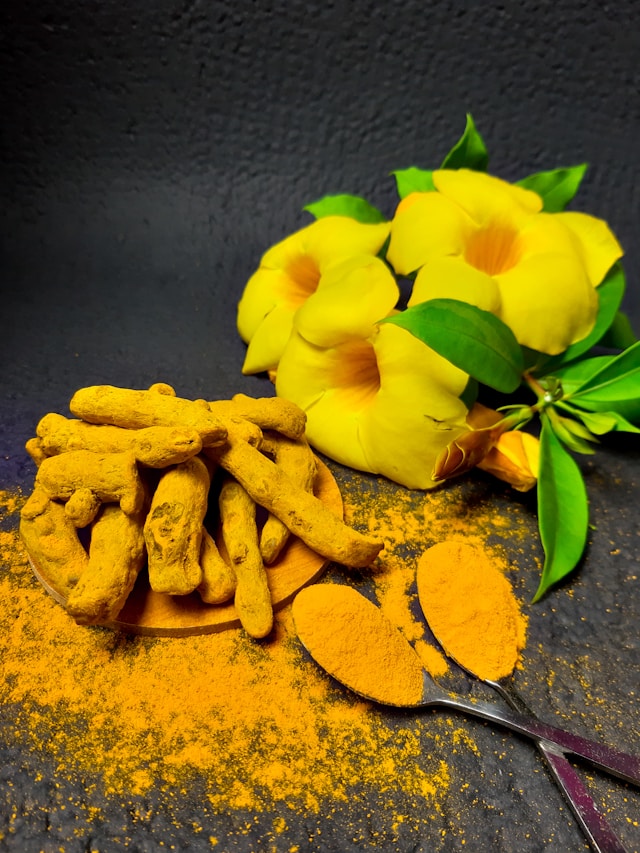
Turmeric is in so many Indian dishes that it is easy to stop seeing it. Then wellness marketing arrives and turns the same pinch into a cure for almost everything.
What you get from 1 teaspoon ground (3 g)
| Energy | 9 kcal |
| Protein | 0.3 g |
| Carbohydrate | 2 g |
| Fat | 0.1 g |
| Fibre | 0.7 g |
Source: USDA FoodData Central – www.fdc.nal.usda.gov. Values are approximate and may vary by variety and preparation.
| Read the numbers this wayThis serving gives a small macronutrient contribution in the serving normally used. The more important story is what its key nutrients do once the ingredient becomes part of a complete meal. |
Why it earns a place
Turmeric contains curcuminoids, pigments studied for anti-inflammatory effects. In food, the amount is modest; absorption is also limited. Its everyday value is colour, flavour and a small contribution of plant compounds – not a promise to treat disease. Used with vegetables, pulses and eggs, turmeric makes simple food look warmer and more appetising before the first bite.
Protein: the repair material
Your body uses protein to replace worn-out cells and maintain muscle, skin, enzymes and many hormones. A meal with enough protein usually keeps you satisfied for longer than one built mainly from refined starch.
Dietary fibre: smoother digestion and steadier energy
Fibre gives stool enough bulk to move through the gut more easily. It also slows the release of sugar from a meal, so energy arrives more steadily instead of rising and falling all at once.
Potassium: balancing fluid and keeping muscles working
Potassium helps balance some of sodium’s effects and is needed for normal muscle contraction and nerve signals. Fruit, vegetables, pulses and dairy are useful everyday sources.
Plant compounds: small amounts, repeated often
Polyphenols and related plant compounds help plants defend themselves and can interact with the body’s antioxidant and signalling systems. Their value is most believable as part of a varied diet, not as a reason to take concentrated extracts.
Who may find this food especially useful
| People who want more flavour without depending on packaged saucesHerbs and spices are especially useful when someone is trying to reduce excess salt, sugar or heavy sauces. Culinary amounts can make simple food easier to repeat, which is usually more valuable than concentrated supplements. |
What needs context
| The limitation worth knowingHigh-dose supplements can cause stomach problems and may interact with blood thinners or gallbladder conditions. Adulteration with lead-containing colourants has also been reported, so source matters. |
Try this next time
Turmeric scrambled eggs
Cook chopped onion and tomato, add a pinch of turmeric and pepper, then fold in 2 beaten eggs.
Source: Indian Scrambled Eggs – www.bbcgoodfood.com